About Me
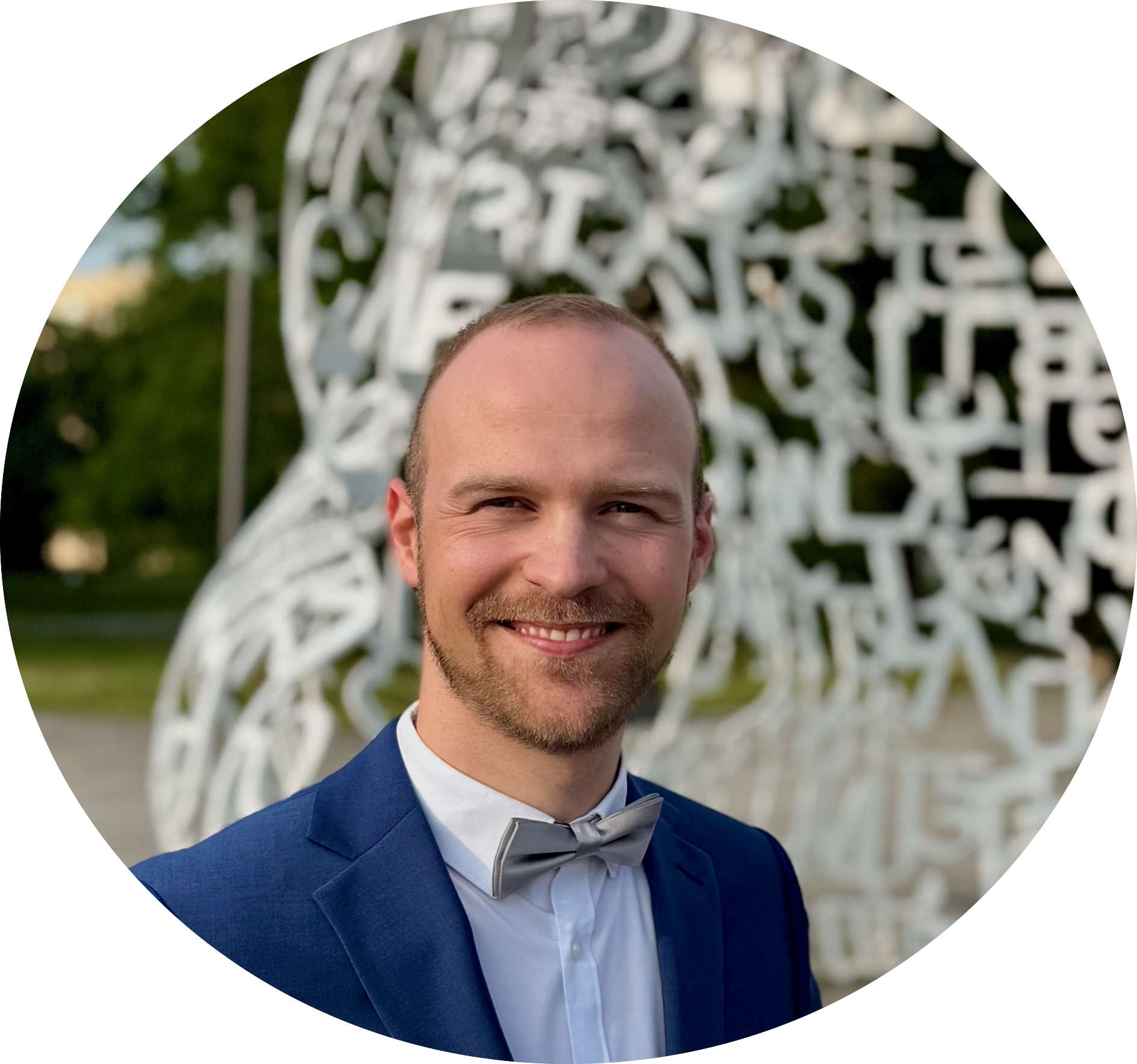
I am a Postdoctoral Researcher at Albert Ludwigs University of Freiburg, holding a Master’s degree in Mathematics and a Master’s degree in Psychology from Goethe University Frankfurt. In 2024, I obtained my PhD from Goethe University Frankfurt with the dissertation “Model Selection and Estimation of Statistical Power in Nonlinear Structural Equation Modeling.” For this work, I received the Best Dissertation Award of the Natural Sciences (2025) from Goethe University as well as the Gustav A. Lienert Award of the Methods and Evaluation Division of the German Psychological Society (DGPs) for 2023–2025.
My research centers on advancing statistical methodology across psychology, statistics, data science, psychometrics, and econometrics by developing, improving and testing statistical approaches. I specialize in simulation-based and machine learning approaches, non-parametric and complex data analysis, with applications to core scientific challenges such as power analysis and sample size planning, causal inference, longitudinal data modeling, and model evaluation. Ultimately, my goal is to provide researchers with tools that make their inferences more reliable and their designs more efficient.
I have published in several methodological journals such as Psychometrika and Behavior Research Methods. I am currently a guest editor at Behavior Research Methods for the Special Issue Methodological Challenges of Complex Latent Mediator and Moderator Models.
I have authored and contributed to several R packages. Most prominently powerNLSEM, which automates simulation-based power analysis for nonlinear structural equation modeling (NLSEM) and was a core part of my dissertation project. Other R packages include mvDFA and ezCutoffs.
These tools are freely available underlining my commitment to open science and to providing the research community with sustainable software solutions.
I am committed to educating young researchers about the critical and responsible use of artificial intelligence.
I have taught more than 20 courses as lecturer and student assistant for psychologists, clinical psychologists, mathematicians, statisticians, biologists and environmental scientists, supervised over 8 Bachelor’s and Master’s theses, and conducted more than 50 statistical consultations for scientists from students to full professors as well as industry researchers.
I have authored more than 45 blog-type tutorials on conducting statistical analyses in R on PandaR, making advanced methods accessible to a broad audience.
Through this work I have gained substantial experience in designing and delivering lectures, seminars, and workshops, in mentoring students, and in interdisciplinary teaching. I make use of modern, interactive teaching approaches to actively engage students and foster critical thinking.
I am one of two young researcher representatives of the Methods and Evaluation Division (Fachgruppe für Methoden und Evaluation) of the Deutsche Gesellschaft für Psychologie (DGPS).
In this role, I help shape the methodological agenda of the discipline, represent early-career researchers at the national level, and lead initiatives such as conferences, workshops, and networking events that strengthen the visibility and collaboration of the next generation of scholars.
Find out more about my publications, talks, workshops, software packages, and honorary work – check out my CV.